

Contact Info
- 289-968-5968
- info@jaideproducts.com
-
32 Seapark Dr, St. Catharines,
Ontario, CANADA L2M 6S6
The Roturner by Jaide Products is used by physiotherapists and rehabilitation teams, in hospitals, clinics, care facilities, and private homes, to support daily exercises for elderly and mobility-impaired patients. These include sit-to-stands, standing leg raises, and leg kickbacks, performed directly at the bedside or in the living room without requiring the patient to travel to a physiotherapy gym. It weighs approximately 25 lbs, can be wiped down with standard disinfectant wipes between uses, and is operated by a single caregiver or therapist
For many people living at home with a mobility condition, or for patients recovering in hospital, wanting to stay mobile and doing the exercises exercises comes down to one practical barrier: access. Getting to a physiotherapy gym is not always possible, and for someone already fatigued or anxious, the effort of travelling there can make consistent exercise feel out of reach.
The Roturner by Jaide Products removes that barrier. Because it is lightweight, portable, and can be brought directly to the patient, rehabilitation exercises can happen at the bedside, in the living room, or at the hospital bedside, as part of a daily routine rather than a scheduled appointment. And because the curved frame provides safe, structured support, both physiotherapists and patients can work through exercises confidently, without the risk of a fall or a therapist strain injury.
This blog covers the specific exercises the Roturner supports, the benefits for patients and clinicians across home and clinical settings, and why physiotherapy teams in hospitals, retirement communities, and private homes across Canada have made it part of their rehabilitation toolkit. See our How It Works page for a full overview of clinical applications.
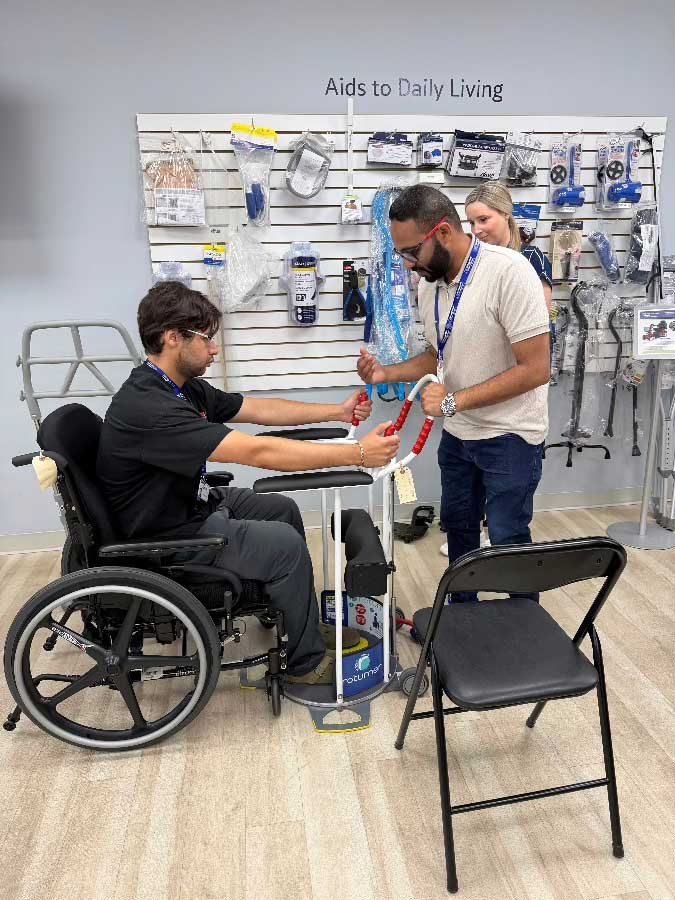
Sit-to-stand training is one of the most clinically validated exercises in geriatric rehabilitation. Research consistently shows that regular sit-to-stand practice strengthens the quadriceps and gluteal muscles, improves balance, reduces fall risk, and supports functional independence in elderly adults. For stroke survivors, structured sit-to-stand protocols have been shown to significantly improve the ability to stand safely and independently from standard surfaces, with benefits that extend well beyond the therapy session.
Despite this evidence, many people, whether recovering at home, in a hospital ward, or in a care setting, do not get consistent access to rehabilitation exercise. Physiotherapy appointments are limited, gym space is shared, and for someone at home, travelling to a clinic may not be realistic every day. The result is that many people who would benefit from daily exercise get it only a few times per week, or less.
The consequences are well documented: muscle atrophy, increased fall risk, reduced bone density, declining functional capacity, and loss of the independence that directly affects quality of life. Preventing this decline requires daily movement, and daily movement requires a practical way to deliver it.
The Roturner’s curved wrap-around frame creates a stable, enclosed support structure that allows patients to safely perform weight-bearing and standing exercises. Because the patient has something solid to hold and lean against, they can exercise with confidence, even when balance or leg strength is compromised. The following exercises are all commonly performed using the Roturner as a support frame.
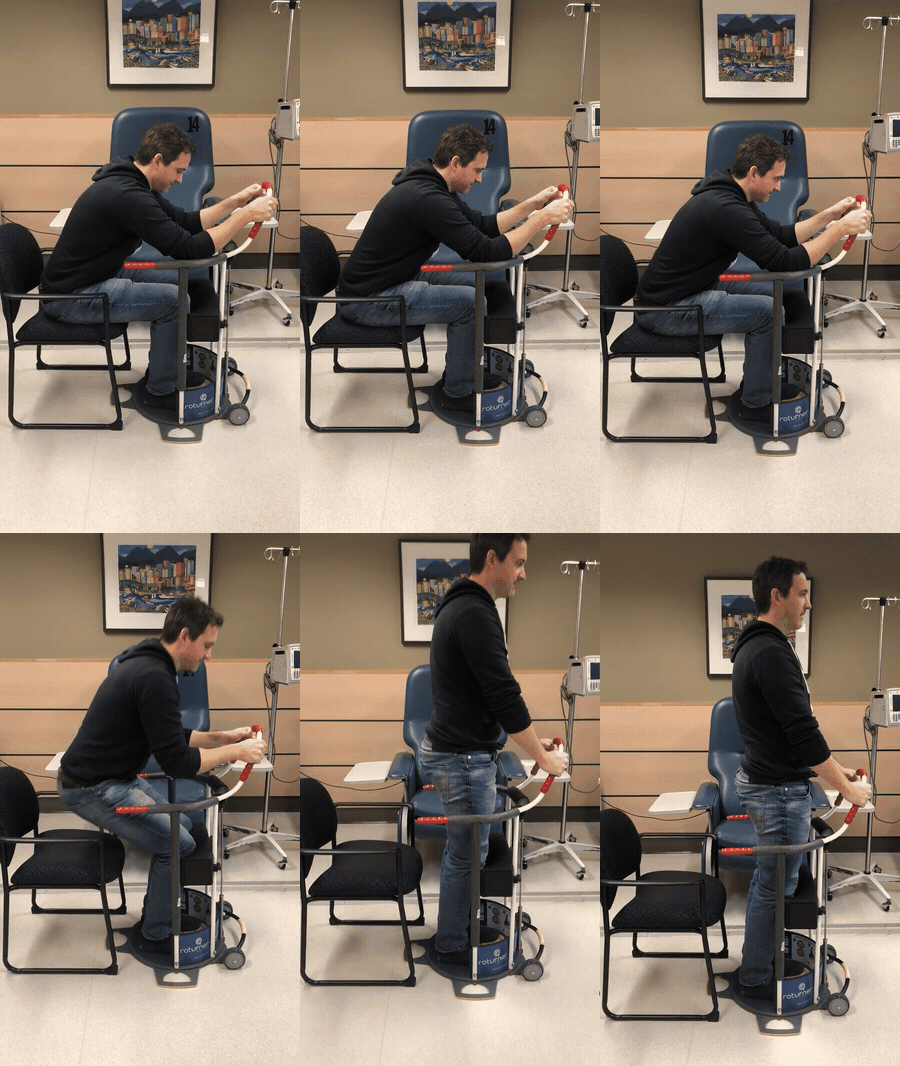
Exercise: Sit-to-Stand (Supported)
Starting position: Patient seated, Roturner positioned directly in front of them.
Action: Patient grips the frame handles, leans forward (nose over toes), and pushes through their feet to rise to standing. They then lower themselves back to seated in a controlled movement.
Repetitions: Typically 5-15 repetitions depending on the patient’s strength and endurance.Caregiver role: Light guidance at hips or mid-back. No bearing of the patient’s weight.
Sit-to-stand is the single most functional exercise in geriatric rehabilitation, it directly replicates the movement needed to get up from a chair, toilet, bed, or car seat. Regular practice builds quadriceps and gluteal strength, improves balance at the most vulnerable moment of daily movement, and gives patients the confidence to stand without fearing a fall.
Because the Roturner provides a frame to hold throughout the movement, patients who are not yet strong enough to stand without support can still practise the sit-to-stand pattern, building towards independence incrementally, repetition by repetition.
Exercise: Standing Leg Raise (Front)
Starting position: Patient standing inside the Roturner frame, holding the handles for balance support.
Action: Patient slowly raises one leg forward from the hip, keeping the knee straight. Holds briefly at the top, then lowers with control.
Repetitions: 10–15 per leg.
Benefit: Strengthens hip flexors and quadriceps. Improves balance and weight-shifting ability both critical for safe walking.
Leg raises performed in standing are more functionally valuable than the same exercise performed seated, because they require balance and single-leg weight-bearing, skills that translate directly to walking, stair climbing, and fall prevention. The Roturner’s frame allows patients to perform standing leg raises safely, even when their balance would otherwise make standing exercises risky.
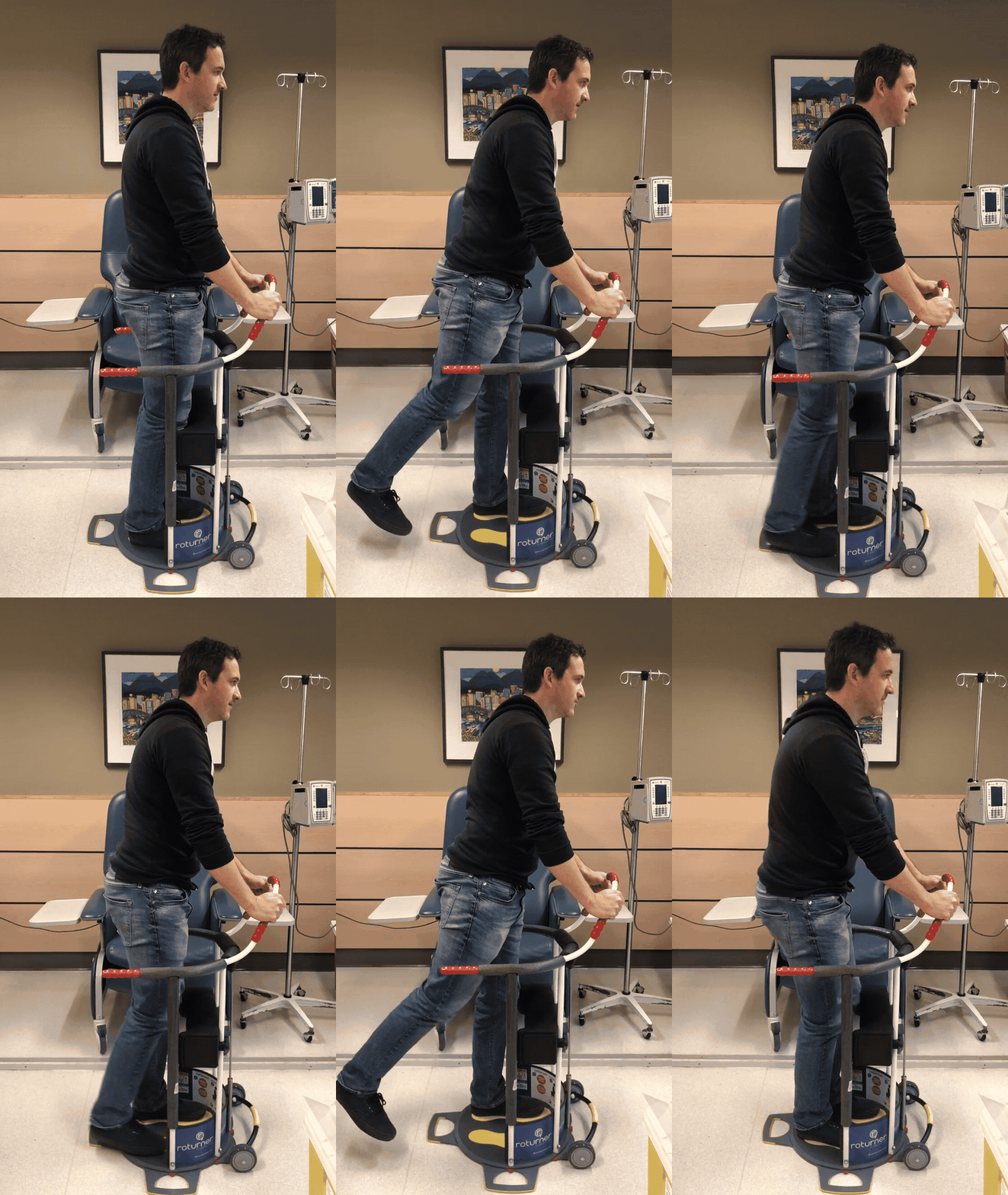
Exercise: Standing Hip Extension (Leg Kickback)
Starting position: Patient standing inside the Roturner frame, leaning slightly forward with hands on the frame handles.
Action: Patient slowly extends one leg backwards from the hip, keeping the knee straight and the movement controlled. Returns to starting position with control.
Repetitions: 10–15 per leg.
Benefit: Targets the gluteal muscles and hip extensors, key muscles for standing posture, walking propulsion, and getting up from sitting.
Gluteal weakness is one of the most common contributors to falls and functional decline in older adults. Leg kickbacks are one of the most direct ways to address it, and the Roturner makes them accessible to patients who need a support structure to perform standing exercises safely.
Exercise: Standing Heel Raise
Starting position: Patient standing inside the Roturner frame, holding the handles lightly for balance support.
Action: Patient rises onto the balls of their feet, holds briefly, then lowers back to flat feet with control.
Repetitions: 10–20.
Benefit: Strengthens calf muscles and ankle stability. Directly reduces fall risk by improving ankle control during weight-shifting.
Calf and ankle strength are often overlooked in elderly rehabilitation programmes, but they are critical for balance reactions, the automatic adjustments the body makes to avoid a fall when balance is disturbed. Heel raises are simple, low-intensity, and highly effective when performed consistently.
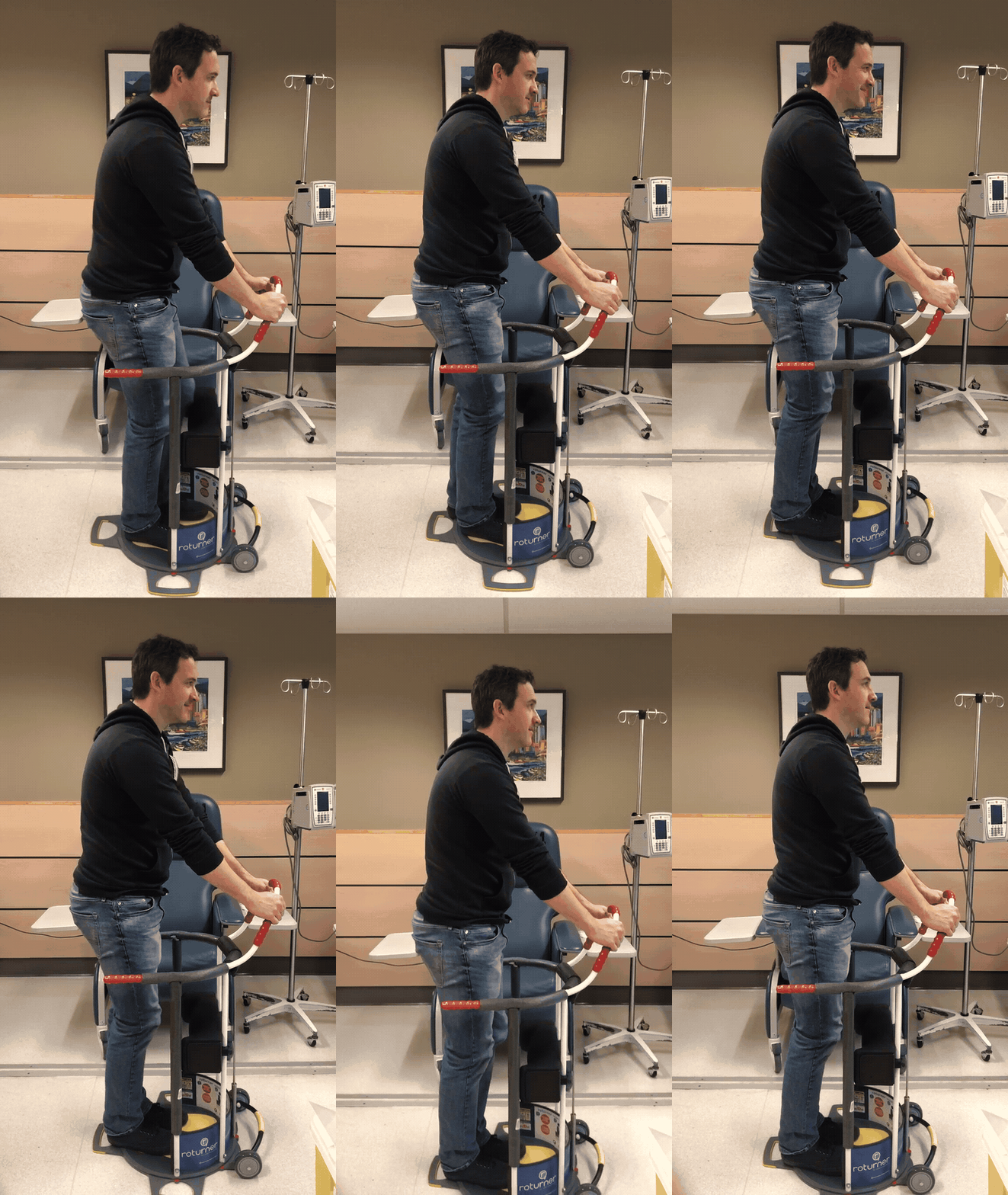
Exercise: Supported Standing Hold
Starting position: Patient standing inside the Roturner frame, holding the handles.
Action: Patient maintains a standing position, gradually reducing their grip pressure as confidence builds. The therapist can introduce gentle perturbations to challenge dynamic balance.
Duration: 30 seconds to 3 minutes depending on patient capacity.
Benefit: Builds standing endurance, confidence, and balance control. Particularly valuable for patients in the early stages of stroke recovery or post-operative rehabilitation.
For many patients, simply standing, and trusting that they will not fall, is a therapeutic goal in itself. The Roturner provides the safety net that makes this practice possible, allowing patients to build standing tolerance without the fear of falling that otherwise prevents them from trying.
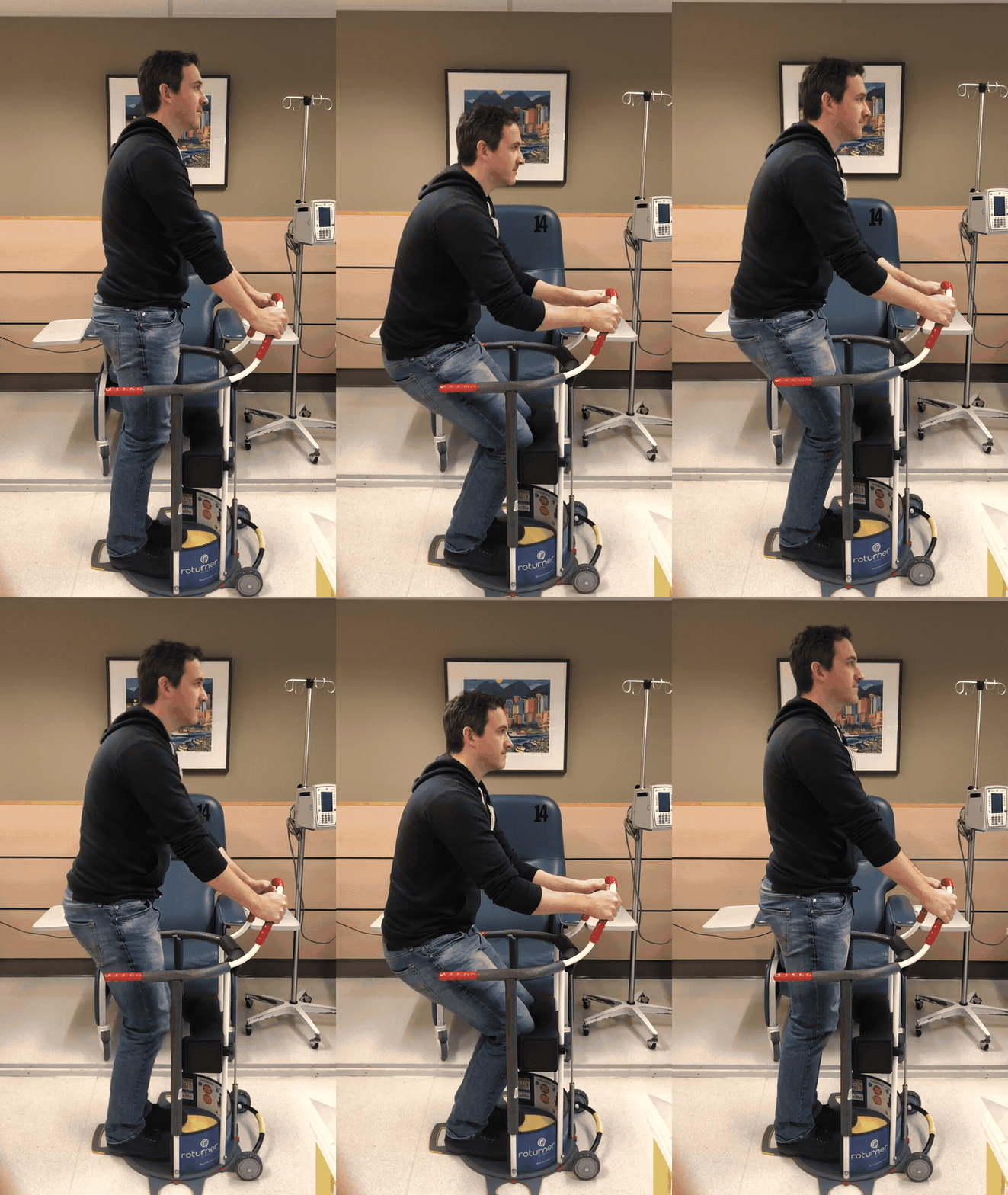
When rehabilitation equipment can be brought to the patient, whether at home, in a hospital room, or in a care setting, rather than the patient travelling to a gym, exercise frequency increases, patient fatigue before the session is reduced, and therapy can happen at the times of day when the patient is most capable. The Roturner, at approximately 25 lbs, is portable enough to be carried to any room by a single physiotherapist or caregiver.
At approximately 25 lbs, the Roturner is light enough to be brought to any room, a hospital ward, a living room, a care home bedroom, by a single physiotherapist or caregiver. It requires no setup, no assembly, and no special floor space, it can be used in a standard resident room, beside the bed, with no rearrangement of furniture.
This means a physiotherapist can arrive at a client’s home or bedside, position the Roturner in front of their chair or bed, and begin the session immediately. The session can be as short as five to ten minutes, enough time for a meaningful set of sit-to-stands or leg raises, without the client ever leaving their room.
Whether the client is at home recovering from a stroke, in a hospital ward post-surgery, or in a care home, this portability means exercise can happen daily, not just on the days when a gym is available or transport can be arranged.
One aspect of rehabilitation that is rarely discussed is the physical toll on physiotherapists and rehabilitation aides. When working with elderly or mobility-impaired patients on standing exercises, therapists frequently need to bear some of the client’s weight, crouching, holding, and supporting through exercises that would be unsafe without manual assistance. Over time, this is a significant source of musculoskeletal injury for rehabilitation professionals.
The Roturner removes this requirement entirely. Because the frame provides the structural support the client needs, the physiotherapist guides and coaches, they do not bear weight. They can stand upright, observe the client’s form, provide verbal cues, and adjust the exercise as needed, without the physical strain of manual assistance.
This benefit compounds over a career. A physiotherapist who spends years working with the Roturner rather than manually supporting patients through standing exercises is a physiotherapist who avoids years of cumulative strain, and who can continue practising for longer.
Whether used at home, in a hospital, or in a care home, the Roturner’s practical design advantages make it consistently suitable across settings. Four features stand out:
| Feature | Why It Matters in Long-Term Care |
|---|---|
|
Lightweight & portable |
At ~25 lbs, it is carried easily from resident to resident by a single staff member. No storage room required, it can sit in a corner of any resident’s room. |
|
Disinfectable |
The Roturner can be wiped down with standard disinfectant wipes between uses, essential in a setting where infection control is a regulatory requirement and an everyday priority. |
|
Compact footprint |
The Roturner’s compact design fits in standard resident rooms, standard bathrooms, and through standard doorways. It does not require the wide corridors and open spaces of larger clinical equipment. |
|
Single-caregiver operation |
Transfers that previously required two staff members can be completed by one. In a long-term care environment where staffing is always a constraint, this is a meaningful operational benefit, particularly on evening and overnight shifts. |
People using the Roturner at home consistently report that it gives them confidence to exercise independently between physiotherapy appointments. Clinicians report that it reduces time per transfer, allows more patients to be supported during busy periods, and reduces the incidence of staff back injuries associated with manual transfers and exercise support.
The Roturner’s rehabilitation and transfer applications serve a wide range of patients, at home, in hospital, and in care settings:
For a full overview of clinical applications, see the How It Works page or download the clinical brochure.
Using a standing frame such as the Roturner, elderly patients can safely perform sit-to-stands, standing leg raises, leg kickbacks, heel raises, and supported standing balance practice. The frame provides a secure structure to hold throughout each exercise, making standing exercises accessible to patients who lack the balance or leg strength to perform them unsupported.
Yes, The Roturner weighs approximately 25 lbs and can be carried to any patient’s room or home by a single physiotherapist or caregiver. Sit-to-stand exercises, leg raises, kickbacks, and balance practice can all be performed at the bedside or in the living room without specialised gym space. This makes daily exercise practical for people who cannot or prefer not to travel to a clinic every day.
Because the Roturner’s frame provides the structural support the patient needs during standing exercises, the physiotherapist does not need to manually bear the patient’s weight. They guide and coach from a safe position, standing upright without the crouching, holding, and weight-bearing that causes cumulative musculoskeletal injury for rehabilitation professionals.
Yes, The Roturner was specifically designed with home care in mind, it weighs approximately 25 lbs, fits through standard residential doorways, and can be operated by a single caregiver or family member. It is used by people recovering at home from stroke, hip surgery, and neurological conditions as part of their daily physiotherapy routine.
The Bariatric Roturner supports up to 550 lbs, making it one of the highest-capacity sit-to-stand transfer devices available for both home and clinical settings.
Yes. The Roturner is specifically used in post-stroke rehabilitation for sit-to-stand training. Its wrap-around frame supports bilateral grip and weight-bearing through both legs, which is clinically valuable for neurological recovery and reducing muscle atrophy on the affected side.
Physiotherapy guidelines generally recommend sit-to-stand practice daily for elderly patients with mobility limitations, as consistent repetition is required to build strength and confidence. The Roturner makes daily bedside practice feasible without requiring a scheduled gym appointment.
Yes, The Roturner is used by physiotherapy teams in hospitals and rehabilitation units for bedside standing exercises and transfers particularly in the early post-operative period and during stroke rehabilitation. Its lightweight design means it can be moved between patients on a ward by a single therapist.
The best rehabilitation programme is the one that actually happens, consistently, daily, wherever the patient is: at home, in a hospital ward, or in a care setting.. The Roturner makes that possible: a safe exercise platform, a practical transfer device, and a bedside rehabilitation tool, all in one lightweight, disinfectable, 25 lb frame.
→ Shop the Roturner — Standard & Bariatric Models
→ See All Clinical Applications — How It Works
→ Download the Clinical Brochure